CHAAC I+N+C
English | Español
  • Home
  • Services
    • Green Building Certification
    • Building Energy Modeling >
      • Energy Star Multifamily NC
    • Building Life Cycle Assessment (LCA)
    • Net-Zero Energy in 3 Steps
    • Computational Fluid Dynamics (CFD)
    • Local Expertise >
      • Austin
      • Boston
      • Denver
      • California
      • Mexico
      • Minneapolis
      • New York City
      • Portland
      • Seattle
      • Washington
  • LEED Certification
  • Projects
  • Blog
  • SHOP
  • Online Courses
  • Contact

• SERVICE •

Building Energy Modeling:
​Achieving High-Performance in design and operation

Contact uS NOW

What is an energy model ?

Building energy modeling is the simulation of a building’s expected energy use, comfort, and systems performance before it is built or modified. It is used to ensure compliance with energy codes, support green building certification, and guide design decisions that impact cost and performance outcomes.

Energy modeling allows project teams to compare design options, identify risks early, and demonstrate that a building will meet regulatory and performance targets. This early insight reduces costly changes later in design or during construction, and supports permit approvals and sustainable certifications.

How building energy modeling works ?

An energy model is a computer-based simulation used to evaluate how a building will perform in terms of energy consumption, system efficiency, and thermal comfort before it is built or modified. It is a core decision-making tool used to demonstrate energy code compliance, support green building certifications, and assess the energy impact of design choices.
​

Energy models are commonly required for performance-based energy codes and certification programs, and they are used by design teams to compare alternatives, reduce operational risk, and validate that a building will meet regulatory and performance targets. By simulating building behavior on an hourly basis, energy modeling allows design decisions to be tested before construction, when changes are still practical and cost-effective.

To perform this analysis, architectural and engineering inputs are translated into a calculation model focused on energy-relevant parameters. These inputs are combined with local weather data and operational schedules to estimate heating and cooling loads, system performance, daylight availability, and overall energy consumption.

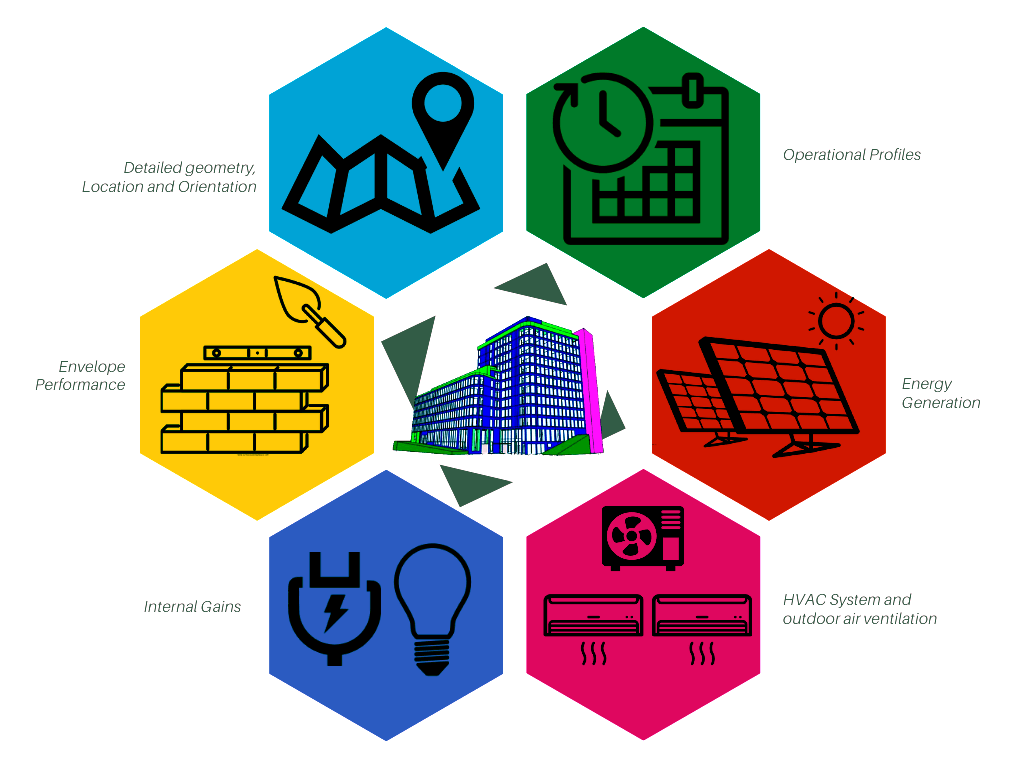
Detailed inputs are crucial for the energy model to provide accurate results. Below is a non-exhaustive list of the required energy modeling inputs:
  • Building geometry including shading devices, landscape features, and surrounding buildings;
  • Location and orientation;
  • Envelope thermal and solar performance
  • Lighting and plug load demands;
  • Occupant load;
  • HVAC systems type, ventilation rates, power consumption, conditioning capacities and efficiencies;
  • Operational profiles; and
  • Energy generation equipment size and performance.
building energy modeling inputs categories

Building Energy Modeling for compliance

The building energy modeling appeared in the industry many decades ago as an alternative method to demonstrate compliance to prescriptive construction standards. All of the standards require that a digital twin of the design building is reproduced as accurate as possible based on construction documentation and operation assumptions. This model is then compared to a copy of this building with standard construction material, lighting and HVAC systems, as well this reference model do not include renewable energy generation.
​These calculations are usually done at the end of the design phase in order to apply for construction permits. At this point changes to the design are costly, thus they are only done in order to reach compliance. However, the modeling is slowly being included in all phases of a project development to contribute to efficiency measures selection, thus reaching higher performance at a lower investment cost. This is supported by regulatory body incentives based on percentage improvement compared to the reference model.
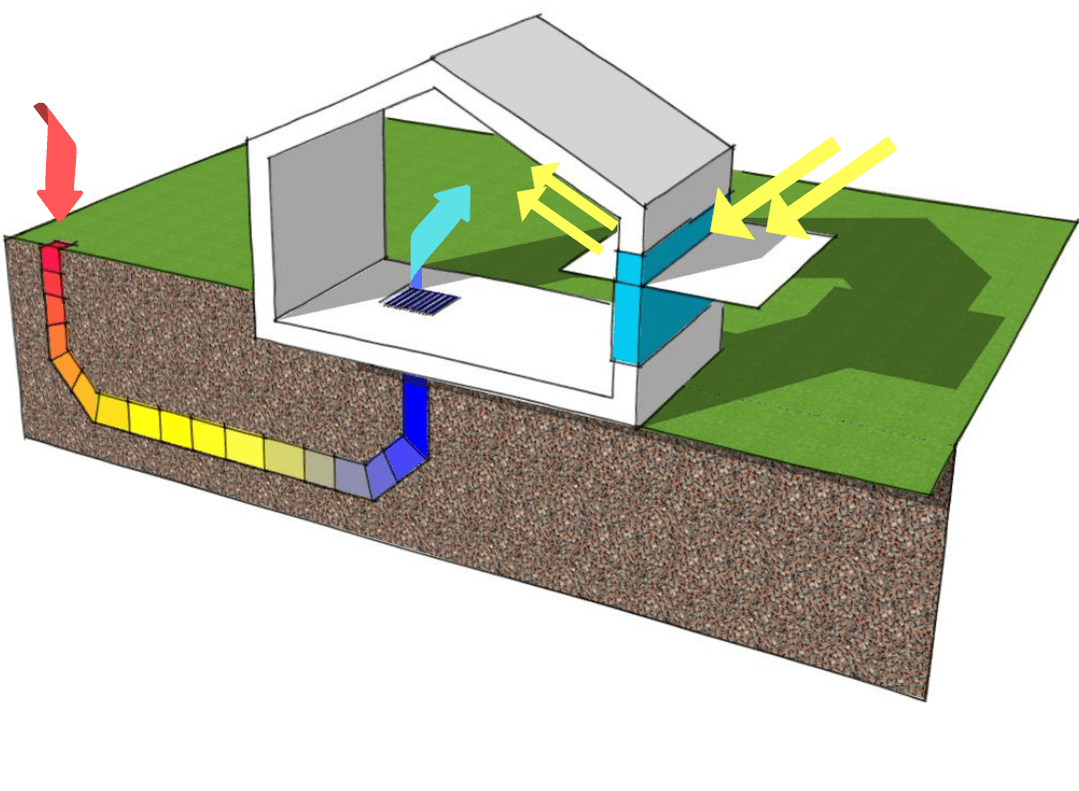
Additionally, energy modeling has been used at a larger scale in the last few years for residential low-rise buildings since it allows a more flexible approach to design. In some circumstances projects prefer to have less performance material than prescriptive requirement of the standard, but using modeling reach compliance using more efficient equipment. As well, construction costs could be greatly reduce while being compliant using passive design measures such as natural ventilation, well-design solar shading and orientation analysis.

get a quote today
Picture
Passive solutions for Net-Zero design.

Building Energy Modeling is a decision-making tool

Historically, energy modeling has been used as an alternative method to the prescriptive approach to comply to building standards. It has been seen however, that they are most useful to optimize a building energy consumption through an interdisciplinary discussion that contributes positively to the project.
​

​Advantages are:
  • Reducing HVAC cost by sizing using a smaller safety factor;
  • Reducing Operating Costs;
  • Increased Asset Value;
  • Enhanced Comfort and Satisfaction for Occupants;
  • Reduce Green House Gas emissions;
  • Reducing energy infrastructure demand; and
  • Facilitate Net-Zero design at a lower investment.

Integrated Building Energy Modeling and BIM 7D

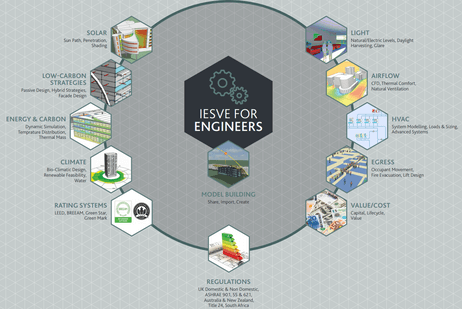
Our team of experts is aiming to reach the highest sustainability level through an integrated design process. This allows us to integrate easily information from the design team and to optimize all factors that contributes our clients' sustainability goals. This is possible using the 7D BIM methodology made possible with the IESVE Software.
1D to 3D->Architectural model from SketchUp, Revit, Autocad or hand sketches.
4D-> Time: relates to using information that varies in time for making analysis. Calculation are made for the 8760 hours of the year where temperature, humidity, solar influence, wind flow and occupant behaviour are evolving. As well, the changes of the design are easily integrated.
5D-> Evaluating the cost of energy consumption on a yearly basis and inform of the impact of design change on the energy cost of operation. Permit to balance the material and HVAC system performance using simulation as the decision making tool for first cost investment.
6D-> Define sustainability level of the design, document for standard/ certification compliance and to track the CO2 emissions.
7D-> Calibrate the energy model using real building operation changes (temperature, lighting, people) and adjust operational strategies to reduce energy consumption.
Picture
Image courtesy of Integrated Environmental Solutions Limited.

Building Energy Modeling — Frequently Asked Questions

What is building energy modeling used for?

Building energy modeling is used to evaluate how a building will perform in terms of energy consumption, thermal comfort, and system efficiency. It supports code compliance, green building certifications, and design decisions by simulating performance before construction.

When is energy modeling required for a project?

Energy modeling is commonly required for performance-based energy code compliance such as California Title 24 and ASHRAE 90.1, as well as for LEED and utility incentive programs. It is also used to evaluate design alternatives.

What software is used for building energy modeling?

Energy models are developed using industry-approved simulation software that performs hourly calculations based on weather data, system characteristics, and occupancy schedules. The software used depends on project type and compliance pathway.

How accurate are energy modeling results?

Energy modeling results are estimates based on standardized assumptions and design inputs. Accuracy depends on the quality of project information and the experience of the modeler interpreting system behavior.

Is energy modeling required for Title 24 or LEED?

Energy modeling is required for performance-based Title 24 compliance and is commonly used for LEED Energy and Atmosphere credits. It demonstrates compliance and quantifies energy performance against baseline requirements.

What information is needed to start an energy model?

Typical inputs include architectural drawings, envelope assemblies, mechanical system descriptions, lighting layouts, and operational schedules. Complete inputs reduce revisions and improve turnaround time.

Discuss Your Energy Modeling Needs

GREEN BUILDING CERTIFICATION - ENERGY MODELING - 
 NET-ZERO ENERGY - DAYLIGHT ANALYSIS - BUILDING LIFE CYCLE ASSESSMENT (LCA)

CERTIFICACIÓN DE EDIFICIO VERDE - MODELIZACIÓN ENERGÉTICA - 
 NETO CERO ENERGÍA - ANÁLISIS DE ILUMINACIÓN NATURAL - ANÁLISIS DE CICLO DE VIDA (ACV)


AIA 2030 Commitment Signatory Firm
Approved Energy Star MFNC ASHRAE Path Modeler Multifamily New Construction
Mexican business excellence awards 2019
IBPSA-Mexico member
LEED Credential Green Associate
Miembro SUME Sustentabilidad para Mexico
USGBC Member

​Serving all of United States compliance requirements remotely.
​

Offices | Oficinas

Calle 20 106, Oficina 305,
Colonia México, Mérida, Yucatán,
México ​97125
+52 999 838-0096
[email protected]
Chaac Simulaciones Inc
Copyright © 2018-2026 Chaac Simulaciones Inc. All Rights Reserved. ​​
  • Home
  • Services
    • Green Building Certification
    • Building Energy Modeling >
      • Energy Star Multifamily NC
    • Building Life Cycle Assessment (LCA)
    • Net-Zero Energy in 3 Steps
    • Computational Fluid Dynamics (CFD)
    • Local Expertise >
      • Austin
      • Boston
      • Denver
      • California
      • Mexico
      • Minneapolis
      • New York City
      • Portland
      • Seattle
      • Washington
  • LEED Certification
  • Projects
  • Blog
  • SHOP
  • Online Courses
  • Contact
  • English | Español